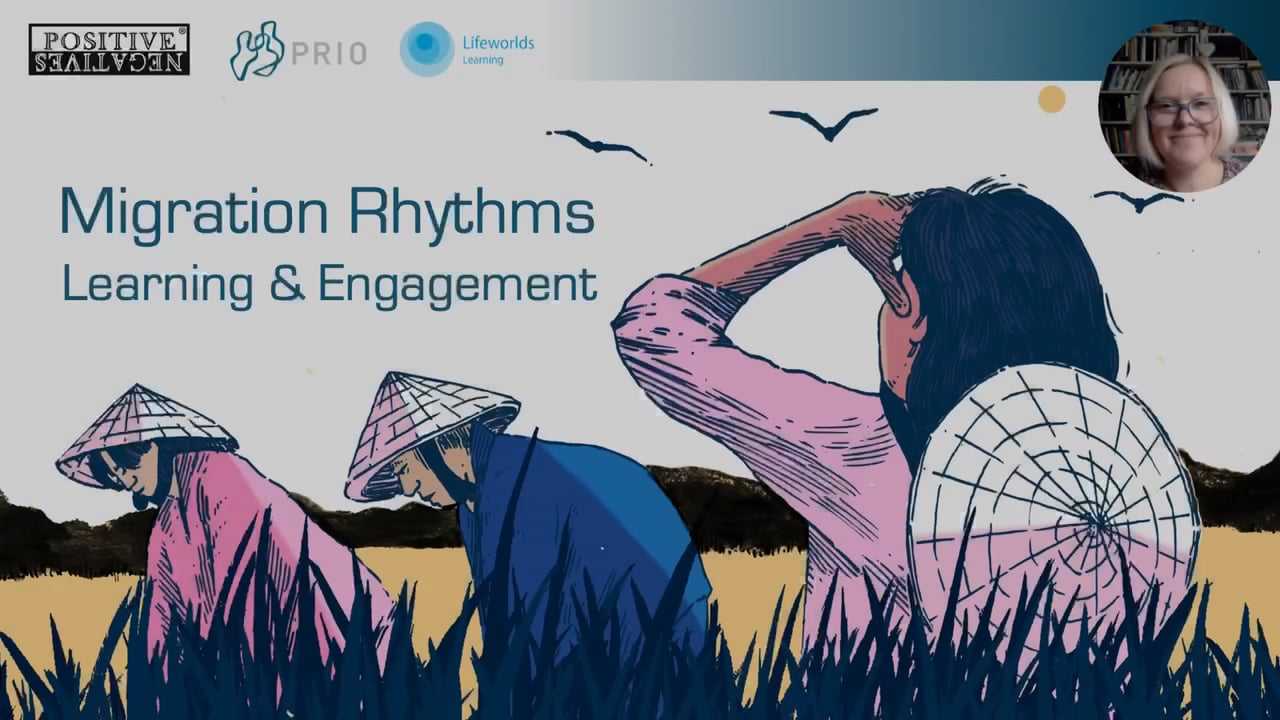

| To bring complex questions of migration and social mobility to life in the classroom, these learning resources use four original animations set in Hanoi, Karachi, Manila and Mumbai, building on research findings. |
|---|
By following stories of middle‑class families and their trajectories of social mobility, the materials offer an alternative entry point into migration - one of today’s most debated topics.
- Access the Migration Rhythms Learning resources here.
The activities prompt reflection on how migration is encountered in everyday life, what social mobility looks like in different contexts, and which values shape personal choices.
The learning and engagement activities and materials are designed for learners aged 14+ and different elements can work well across secondary, upper-secondary and undergraduate levels of education.
The learning resources are relevant across geography, sociology, anthropology, history, citizenship studies and life‑skills education, and they also support English teaching worldwide by moving beyond a UK‑ and US‑centric focus—particularly valuable for Global English themes.
These Open Access resources provide educators with a dynamic, research‑grounded toolkit for exploring migration in thought‑provoking ways.
Created in collaboration with locally based artists, the animations and accompanying materials draw on the ERC‑funded project Migration rhythms in trajectories of upward social mobility in Asia and have been developed by Lifeworlds in collaboration with PositiveNegatives and the research team at PRIO and beyond.
Do also check out the underlying animations (and comics) available in English and, respectively, for Hanoi also in Vietnamese, for Karachi also in Urdu, for Manila also in Filipino, and for Mumbai also in Hindi.
Winged wishes for my daughter: Moving for different opportunities can build confidence and independence, and prioritising happiness is important, and can impact social mobility. The value and necessity of being frugal and savvy with money, in order to achieve aspirations and despite hard work and saving, upward change may only be small, but life is about having enough, and living a modest and content life is the aim. The story centres on a woman who is now in her 60’s in Hanoi, and the life of herself, her daughter, and grandchild.
Paths to where we are: How people live their lives today can in some ways be traced back through their family story, including in relation to inheriting homes. Human lives can be impacted by change across generations, from grandparents, via parents to oneself – such as in the case of upward social mobility, over time in a family. This story, based in one home, focuses on three generations of a family in Karachi, from the time of Partition to the present day, and how we all stand on the shoulders of those who came before us.
Tita Nurse and the Balikbayan box: An individual’s personal journey of international labour migration can become an entire family’s pathway for upward social mobility. It may be an individual move to seek better opportunities, but it can also become a journey of hard work and sacrifice. Especially when the migrant strives to earn enough abroad to support the family back home. It also becomes more complex, as a family’s reliance on remittances and an enduring sense of contribution and responsibility can overwhelm the migrant as they also pursue personal goals. This story focuses on a Filipino nurse in Germany who has worked abroad while providing for her family back home and the challenges that brings.
Rahul, Varsha, Shankar and the City of Opportunity: Rural to urban migration is contributing to improved living standards and realising life aspirations for many across Asia. This animation tells multiple migration stories around education, work or love, enabling social mobility across generations, to Mumbai; a city of opportunity.